 PONS Duke
This series spotlights Duke neuroscience postdocs who have successfully transitioned to new career paths, sharing their job search strategies and insights into how their postdoctoral training prepared them for their next role. Each profile offers practical advice and inspiration for postdocs navigating their own career transitions.
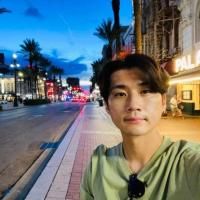
Dr. Jae-Hyun Kim will launch his independent research laboratory at Sungkyunkwan University (SKKU) in South Korea in March of 2026. Having begun his postdoctoral fellowship with Dr. Nuo Li at Baylor College of Medicine in March 2021, Jae-Hyun joined the Duke Department of Neurobiology when the Li lab moved to Duke in 2024. Jae-Hyun’s research probes the neural substrates of motor memory, utilizing longitudinal two-photon calcium imaging of frontal cortex in mice sequentially performing multiple perceptual decision-making tasks.
Reflecting on his postdoctoral time, Jae-Hyun notes that two key individuals had a deep impact on his experience and scientific growth.
“I would like to express my deep appreciation for my PI, Nuo. He is intellectually inspiring and consistently challenges me to think deeply and critically. He has an exceptional ability to connect big-picture questions in the field with rigorous and detailed data analysis methods. Beyond his scientific insight, he is a genuinely supportive and encouraging mentor. His guidance played a central role in my development as an independent scientist.”
Additionally, Jae-Hyun credit’s the Li lab’s staff scientist Dr. Jing Lin as being instrumental in his postdoctoral work, particularly by helping to establishing and troubleshooting the automated home-cage training platform that Jae-Hyun’s experiments rely on.
“Without her expertise and dedication, it would have been nearly impossible to train my mice to perform continual learning across multiple tasks.”
Jae-Hyun scientific achievements attracted the attention of the SKKU’s director of the Center for Neuroscience Imaging Research, garnering him a direct job offer. Congratulations Jae-Hyun, we look forward to seeing more exciting science from the Kim lab in the future!
You can reach out to Jae-Hyun via email: ruminsight@gmail.com